Audi Car Finance
  BMW Car Finance
  Ford Car Finance
  Kia Car Finance
  Land Rover Car Finance
  Mercedes Benz Car Finance
  Nissan Car Finance
  Peugeot Car Finance
  Tesla Car Finance
  Toyota Car Finance
  Vauxhall Car Finance
  Volkswagen Car Finance
 Motorbikes – What Can I Ride for My Licence Type?
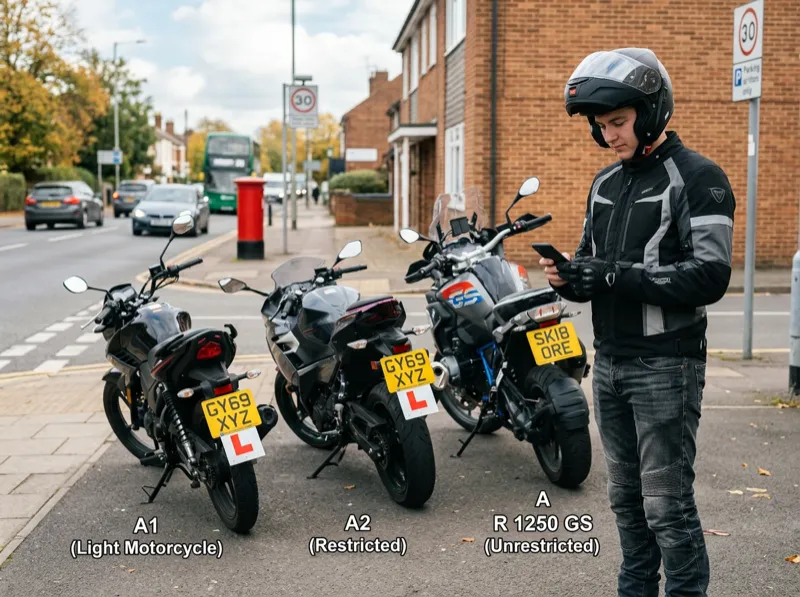
A Complete Guide to Getting a Motorbike Licence
Getting a motorbike licence can feel more complicated than obtaining a standard car licence and in many ways, it is. With different age categories, licence types and training requirements, it’s important to understand your options before getting started.
Whether you’re buying your very first bike or adding another motorcycle to your collection, having the right information will help you choose the most suitable route.
This guide covers everything you need to know about getting a motorbike licence in the UK.
Do I Need a Provisional Licence?
Yes. Before you can begin learning to ride, you must hold a valid provisional driving licence. This is the first step and is required before you can complete your Compulsory Basic Training (CBT).
Without a provisional licence, you cannot legally start training or ride a motorbike on the road.
You will also need valid motorbike insurance before riding, even as a learner.
What Is Compulsory Basic Training (CBT)?
CBT is a mandatory training course that must be completed before riding a moped or motorcycle on public roads.
Importantly, CBT is a course, not a test. However, your instructor must be satisfied that you can ride safely. If they believe you require further training, you may need additional tuition before receiving your certificate.
What Does the CBT Involve?
The course consists of five elements and includes both:
- On-site training in a controlled, traffic-free environment, where you’ll practise basic manoeuvres and handling skills
- On-road riding, with at least two hours spent riding on public roads under instructor supervision
The course typically costs around £150 and, upon completion, you’ll receive a DL196 certificate.
What Can I Ride With a CBT?
Your CBT certificate allows you to ride:
If you are 16:
- A moped up to 50cc (maximum speed 28mph)
- You must display L-plates
- No pillion passengers
- No motorway riding
If you are 17 or over:
- A motorcycle up to 125cc (maximum speed approximately 60mph)
- You must display L-plates
- No pillion passengers
- No motorway riding
Your CBT is valid for two years and allows you to progress towards a full motorcycle licence.
Can I Ride a Moped With a Full Car Licence?
The answer depends on when you passed your car driving test.
If you passed before 1 February 2001:
- You can ride a moped (up to 50cc) without L-plates and without taking CBT.
- You will need CBT if you want to ride anything larger than 50cc.
If you passed after 1 February 2001:
- You must complete CBT before riding a moped or motorcycle.
You may also be exempt from CBT if you already hold a full moped licence (obtained after passing a moped test since 1 December 1990) or if you live and ride on certain offshore islands.
The Two Main Routes to a Full Motorbike Licence
There are two primary ways to obtain a full motorcycle licence: the Direct Access Route and the Progressive Route. The right choice depends on your age and riding experience.
1. The Direct Access Route
The Direct Access Route is designed for new riders who want to obtain the highest licence available to their age group without progressing through each category over time.
This route entitles you to:
- AM licence — From age 16 (up to 50cc)
- A1 licence — From age 17 (up to 125cc)
- A2 licence — From age 19 (motorcycles up to 35kW / 47bhp)
- Full A licence — From age 24 (any motorcycle, unlimited engine size)
This is often the quickest route for riders aged 24 or over who want immediate access to unrestricted motorcycles.
2. The Progressive Route
The Progressive Route allows riders to move up through licence categories over time, gaining experience at each stage.
For example, someone starting at 16 can work through each category consecutively and potentially obtain a full Category A licence by age 21 rather than waiting until 24.
Under this route:
- AM licence — From age 16
- A1 licence — From age 17
- A2 licence — From age 19
- Full A licence — From age 21 (if you have held an A2 licence for at least two years)
An additional benefit of the progressive route is that, provided your theory test certificate remains valid, you will not need to retake the motorcycle theory test when upgrading your licence.
Motorcycle Theory and Practical Tests
To obtain a full motorcycle licence (A1, A2 or A), you must:
- Pass the motorcycle theory test
- Pass the two-part practical test (Module 1 and Module 2)
- Module 1 focuses on off-road manoeuvres
- Module 2 assesses on-road riding ability
Both are designed to ensure you can ride safely and confidently in real-world conditions.
Understanding the Licence Categories at a Glance
| Licence | Minimum Age | What You Can Ride |
|---|---|---|
| AM | 16 | 50cc moped |
| A1 | 17 | 125cc motorcycle |
| A2 | 19 | Motorcycle up to 35kW (47bhp) |
| A | 21 (progressive) / 24 (direct) | Any motorcycle |
Final Thoughts
Although the motorbike licensing system may appear complex at first, it becomes much clearer once you understand the routes available and how they relate to your age and experience.
Taking the time to choose the right pathway ensures you progress safely, legally and with the confidence needed to enjoy riding.
If you’re unsure which option is right for you, seeking advice from an approved motorcycle training school is always a sensible first step.
Motorbike Finance
At Happy Motor Finance we have a large and diverse panel of lenders, meaning obtaining motorbike finance is much easier. No matter what licence type you hold, we have you covered.
All initial applications are on a soft search basis, and many customers secure their finance and their bike before completing.

Happy Motor Finance
FCA Authorised (FRN 989250) · SAF Approved
Our team of FCA-authorised finance specialists help people across the UK get behind the wheel, regardless of credit history. We act as a credit broker, searching a panel of lenders to find the right deal for you.
Ready to Get Started?
Apply for car finance today and get a decision in minutes.
With no impact to your credit score*
We act as a credit broker, not a lender
Representative example: borrowing £6,500 over 5 years with a representative APR of 16.9%, an annual interest rate of 16.9% (Fixed) and a deposit of £0.00, the amount payable would be £161.19 per month, with a total cost of credit of £3,171.55 and a total amount payable of £9,671.55. This is an example only, lender fees may apply. The exact rate you will be offered will depend on your circumstances. All finance subject to status.
*After completing the application, lenders will perform a “soft search” that will not affect your credit score. Should you get an offer of finance and wish to proceed, the lender will then perform a “hard search” of your credit file. Finance acceptance is not guaranteed, please click the following link for more information: Initial Disclosure Document